
Maintenance
The Fall Softener Check We Run Before The First Freeze
Six things to check on a water softener before the first Treasure Valley freeze, from the garage drain line to a salt bridge in the tank.
Published by Treasure Valley Water Solutions
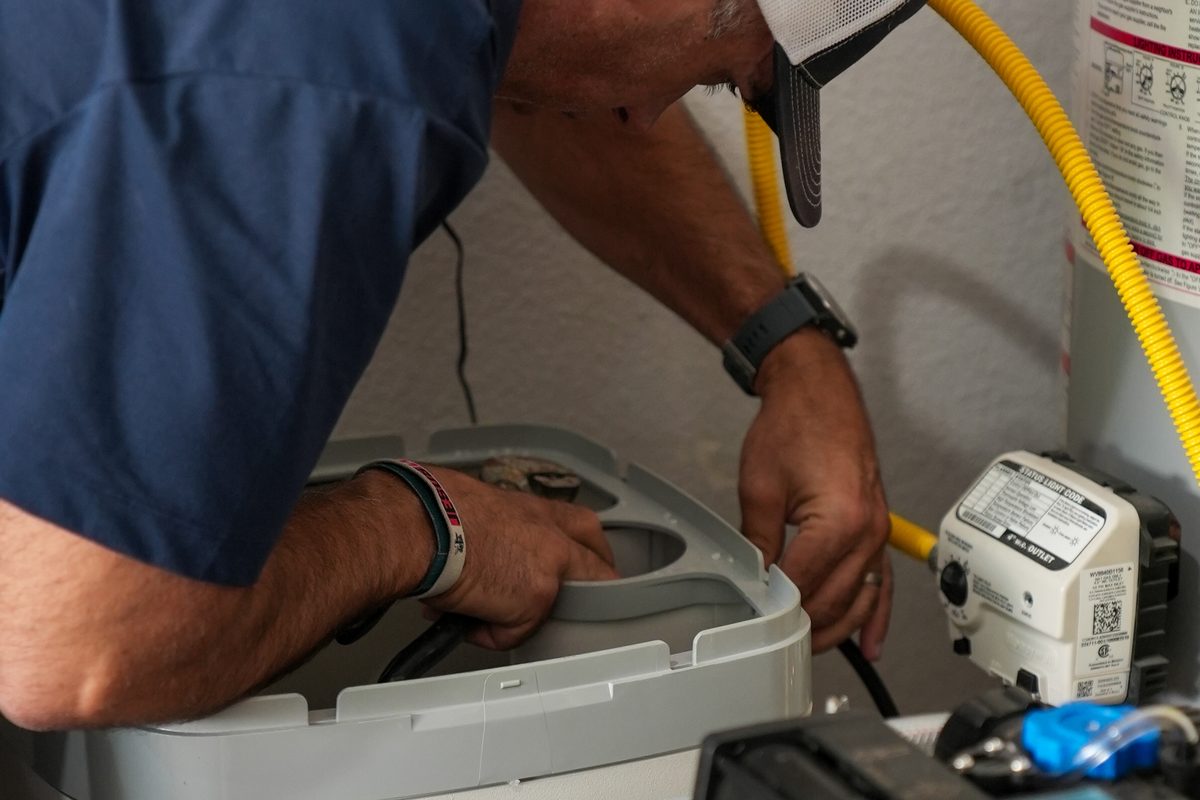
The first hard freeze of the year arrives before the fall feels over, and the softener out in the garage is one of the few machines in the house that gives you no warning at all. It just works. Then one morning it doesn't, and the things that stop it are the kind you could have spotted in ten minutes with a flashlight back in the fall.
None of what follows needs a tool kit or a service call. It's six places to look, each with the reason it matters underneath, and you can get through the lot before the coffee is finished. The first two need nothing but a flashlight, so start there if you only do part of it.
1. Follow the drain line all the way to where it ends
Start here. A softener sends its rinse water out through a small flexible line that runs from the control head to a standpipe, a floor drain or a laundry sink, and that run can cross an unheated garage. Water sits in that line between regenerations. When the garage drops below freezing overnight, the water in the line freezes, and the next regeneration tries to push brine into a pipe that has nowhere to go.
A frozen drain line in an unheated garage is one of the five faults we get called out for most, and we see it every winter. Walk the line with your eyes. If it crosses an exterior wall, runs along the floor near a garage door, or disappears behind something you can't see past, that's the stretch to pay attention to. If the line looks exposed and you aren't sure what to do about it, that's a reasonable thing to book a service call for while the weather is still mild.
2. Open the salt tank and look at how full it is
Filling the brine tank right to the top looks like getting ahead of the cold. It works the other way. A tank crammed to the brim bridges faster than one filled with a little room to spare, because all that weight packs the salt into a solid shelf that sits above the water line.
What you want to see is salt with headroom above it, loose enough that the top layer moves when you push it. Not a smooth crust. Not a flat white ceiling across the whole tank.
3. Push something into the salt and feel for a shelf
This is the test for a bridge, and it takes about four seconds. Take a broom handle, push it straight down into the salt, and pay attention to what your hands feel. Loose salt gives the whole way down. A bridge feels like crust, then a gap, then the bottom.
A bridge is the quiet one, because the tank looks completely full while the brine underneath has nothing left to dissolve into. The softener keeps running its cycle on schedule and rinsing with water that carries no salt in it, so the resin never actually reloads. The water in the house goes hard again and nobody connects it to a tank that looks fine. If you find a shelf, leave the broom handle alone for now; breaking one up has a method to it, and our salt delivery crew breaks them up as part of a normal visit anyway.
4. Look at what's sitting in the bottom of the tank
Once the salt level is low enough to see past, look at the floor of the tank. What you are looking for is a thick sludge layer, because that is salt leaving residue behind. Cleaner salt leaves less residue, and less residue means fewer plugged injectors down the line, another of the five common faults. A plugged injector stops the unit drawing brine at all. It rinses on schedule, uses water, and softens nothing.
5. Read the time and the day on the control head
Power cuts don't wait for a convenient season. A control head that lost its program during an outage will keep regenerating, just at the wrong hour, and a unit that decides to regenerate at seven in the morning hands the house raw water in the middle of four people getting ready.
Check the clock on the display against your phone. If the time is wrong, the regeneration schedule behind it is probably wrong too, and that's worth a call. While you're standing there, note down what the display says. It saves a lot of guessing later.
6. Go test a tap with your hands
The last one is the least technical and the most useful. Wash your hands at a bathroom sink and pay attention to how the soap behaves. Soft water lathers fast and feels slippery to rinse off. If the soap has gone back to that thin, gritty non-lather, and the glasses out of the dishwasher are spotting again the way they did before you had a softener, something upstream has stopped working. Homes in Boise, Meridian and Nampa typically run 8 to 15 grains per gallon, and water isn't soft until it drops under about 3, so the gap between a working softener and a sleeping one is not subtle once you know what you're feeling for.
Any of the six can be the thing. The drain line and the salt tank are the two that take the least effort to look at, so start there. If you'd rather somebody else crawl around the garage floor with a flashlight, that is what a service call is for, and if you want the longer version of how any of this actually works, the water softeners page walks through it properly.
No charge, no obligation
Find out what is in
your own water
A free water test at your kitchen sink shows you what your water is carrying and what it is doing to the house. Monday to Friday, 8am to 6pm. Weekends by appointment.