
How the install goes
A Half-Day Install,
Tested Before We Leave
Softener and filter installs across the Treasure Valley, fitted by our own crew in a fixed order so nothing gets skipped when a job runs long. Shutoff, cut-in, level, drain, slow re-pressurize, then a titration at a tap. Soft water in, soft water out, or the job is not finished.
Meridian based. Ada, Canyon and Gem counties are our core area, plus Elmore, Payette, Owyhee, Boise, Valley and Washington by arrangement.
Most installs run half a day,
and end at a tested tap
A softener is only as good as the day it goes in. We send our own crew, not a subcontractor we met that morning, and we work the same sequence in every house so a long job never quietly loses a step. Shut the water down, cut in where the treated line should begin, set the equipment dead level, run the drain with a proper air gap, then bring pressure back slowly while we watch every joint we opened. The last thing we do is titrate hardness at a fixture. Soft water in, soft water out, or we are not done.
Half a day is the honest average for a straightforward city install in Boise, Meridian or Nampa. A well with iron ahead of the resin, or a garage where the tie-in has to move, can add a couple of hours. We would rather spend those hours than leave you with a system that reads fine on paper and hard at the shower head.
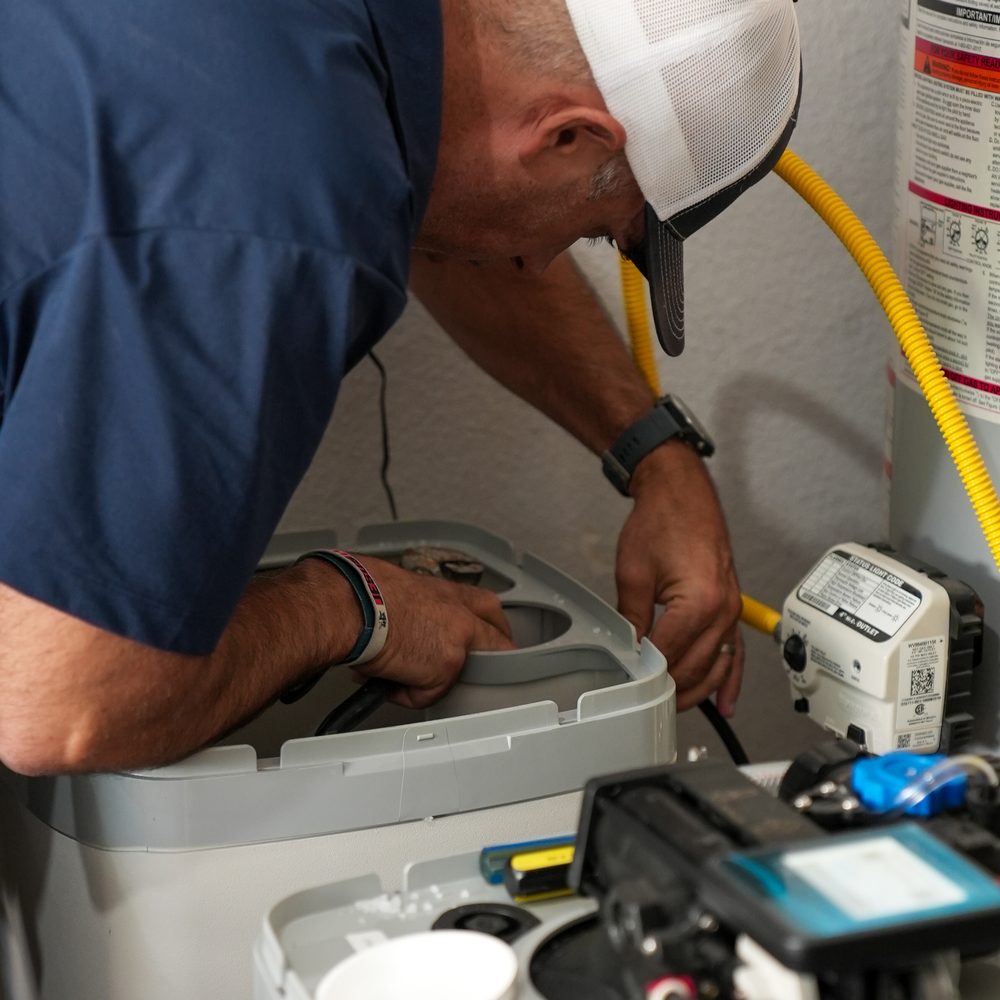
The order we work in,
step by step
None of this is complicated once you have done it a few hundred times. What matters is doing it in order, because a couple of these steps only protect you if the one before it was done right. Here is the sequence we run on a typical softener install.
| Step | What we do | Why it matters |
|---|---|---|
| Shut off and bleed pressure | Close the main, open a low tap to drain the line | Nothing should ever be cut into while it is live |
| Cut in at the treated line | Tie in downstream of the split that feeds the house | Hose bibs and irrigation stay on raw water |
| Set the equipment level | Level the tank and control head on a firm base | A leaning tank channels water and wears the seals |
| Plumb the drain with an air gap | Route the drain to a standpipe with a real gap | Waste water can never siphon back toward supply |
| Re-pressurize slowly | Reopen the main gradually and watch each joint | A slow fill finds a weep before it becomes a flood |
| Test at a tap | Titrate hardness at a fixture, soft in and soft out | Proof the system works before anyone packs up |
Why we insist on a proper air gap
The drain line carries backwash and brine rinse to waste every time the softener regenerates. If that line sits submerged in a standpipe, or drops straight into a sewer tie with no break, a pressure drop in the house can pull waste water back toward your treated supply. A physical air gap, an inch or two of open space between the end of the drain line and the rim of the standpipe, makes back siphoning impossible. It is a small detail a rushed weekend install skips, and it is one of the first things a plumbing inspector looks for.
The same thinking runs through the whole list. We set the tank level so water passes evenly through the resin instead of carving a channel down one side. We bring pressure back slowly so a loose fitting weeps a few drops we can catch, rather than letting a full charge slam the system and turn a small leak into a wet floor. Done in order, none of it is dramatic. Done out of order, or skipped, it is exactly where callbacks come from.
The Meridian loop
that softened the lawn
Every so often the equipment is perfect and the house is still wrong. This one is worth telling because the fault was invisible right up until we tested, which is the whole argument for testing.
Labeled right, piped wrong
Twelve grains in, eleven out
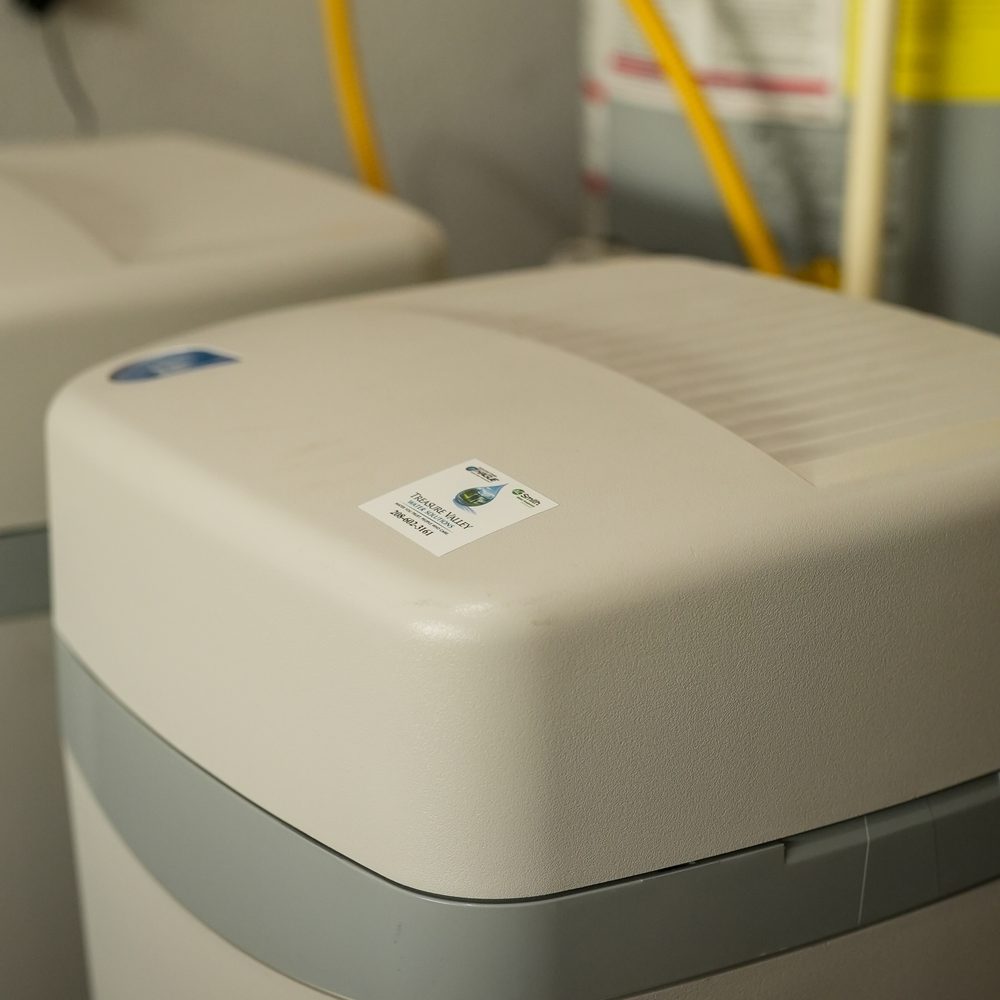
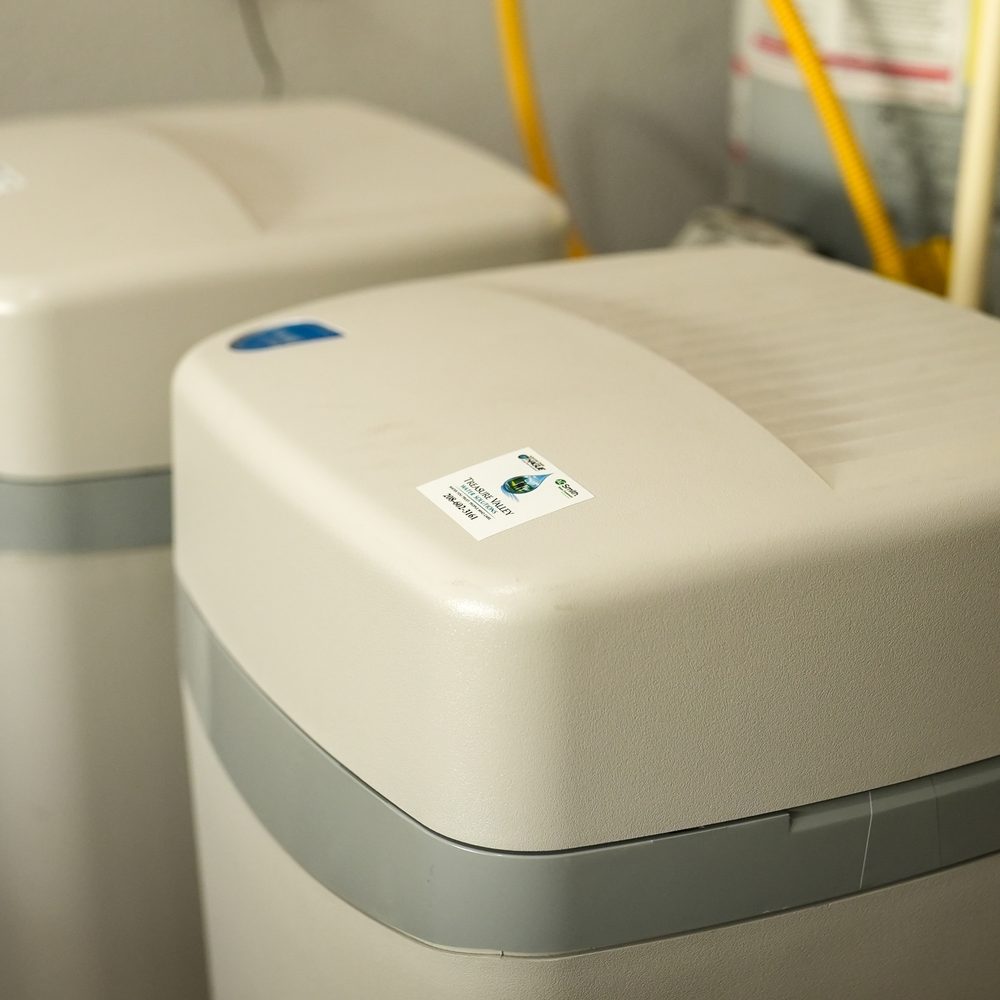
A newer build in Meridian had a factory softener loop waiting in the garage, capped and labeled, sitting right where you would want to tie in. We plumbed the WaterMax onto it, ran a regeneration, and titrated the kitchen tap expecting a number near zero. It read eleven grains against the twelve going in. A working softener does not move the number by a single grain.
So we chased the pipe instead of blaming the unit. The loop had been teed off the branch that fed the outdoor hose bibs, downstream of the split that carried water into the house. Every gallon we softened went straight out to the grass and the flowerbeds. The plumbing was labeled correctly and connected in the wrong place, and it had sat like that since the framing went up.
The fix took two more hours. We pulled the loop off the exterior branch, moved the tie-in upstream on the main so the whole house runs on treated water, kept the water heater on the soft side, and left the hose bibs on raw water so nobody pays salt to soften a lawn. Then we retested at three fixtures. Under one grain everywhere. A crew that never titrates after the install never finds a fault like that, because the box looks connected and the homeowner is the one who discovers it months later, wondering why the glass still spots.
Soft in, soft out,
then we hand it over
The test at the end is not a formality. We titrate hardness at a fixture, watch the drop change color, and set it against the raw number we took before the water ever touched the new resin. If the two read the way they should, near zero out of a working softener, the install is finished. If they do not, we stay until we find out why, the way we did on that Meridian job.
Before we drive away we walk you through the control head, show you where the salt goes and roughly how much, point out the bypass valve in case you ever need to isolate the unit, and leave the raw and treated numbers written down so you have a baseline. If the system is on our rental program, none of that changes. Same crew, same install standard, same air gap, spread over time instead of paid up front, because budget was never a good reason to keep showering in hard water.
"People think the install is the drilling and the pipe. The install is the test at the end. If nobody titrates a tap after the last fitting goes on, nobody actually knows whether the water changed."
What people ask us before install day
No charge, no obligation
Book the test that
comes before the install
Every install starts with thirty minutes at your kitchen sink, anywhere across Ada, Canyon and Gem counties. Monday to Friday, 8am to 6pm, weekends by appointment.