
- Home
- Your Water
- PFAS
PFAS
PFAS, The Chemistry
A Softener Cannot Touch
PFAS are manufactured fluorinated compounds that do not break down in groundwater. A softener exchanges hardness minerals and leaves them completely untouched. Finding them takes certified lab testing, and removing them takes dedicated treatment, not a field kit and not a strip dipped at the counter.
Meridian based. Ada, Canyon and Gem counties are our core area, plus Elmore, Payette, Owyhee, Boise, Valley and Washington by arrangement.
What they are
PFAS are built not
to break down
PFAS stands for per and polyfluoroalkyl substances, a family of manufactured chemicals built around a carbon fluorine bond. That bond is one of the strongest in ordinary chemistry, which is exactly why these compounds were made and exactly why groundwater cannot pull them apart. They do not rust, rot or evaporate away. They move with water and they build up over time, in soil, in the aquifer and in the people drinking from it.
You will not taste them. You will not smell them. Water carrying PFAS looks identical to water carrying none, so nothing at the tap tells a family to pay attention. The only way to know is a sample sent to a certified laboratory, because the amounts that matter are measured in parts per trillion, far below anything a strip or a home kit can resolve.
Why the usual clues fail you
Most water problems announce themselves. Hardness furs up a kettle. Iron stains a sink orange. Sulfur smells like a struck match on a hot August afternoon. PFAS give you none of that. A household can run beautiful looking water for years while a compound that does not belong there sits in every glass. That silence is the whole reason testing has to come first, before anyone talks about equipment.
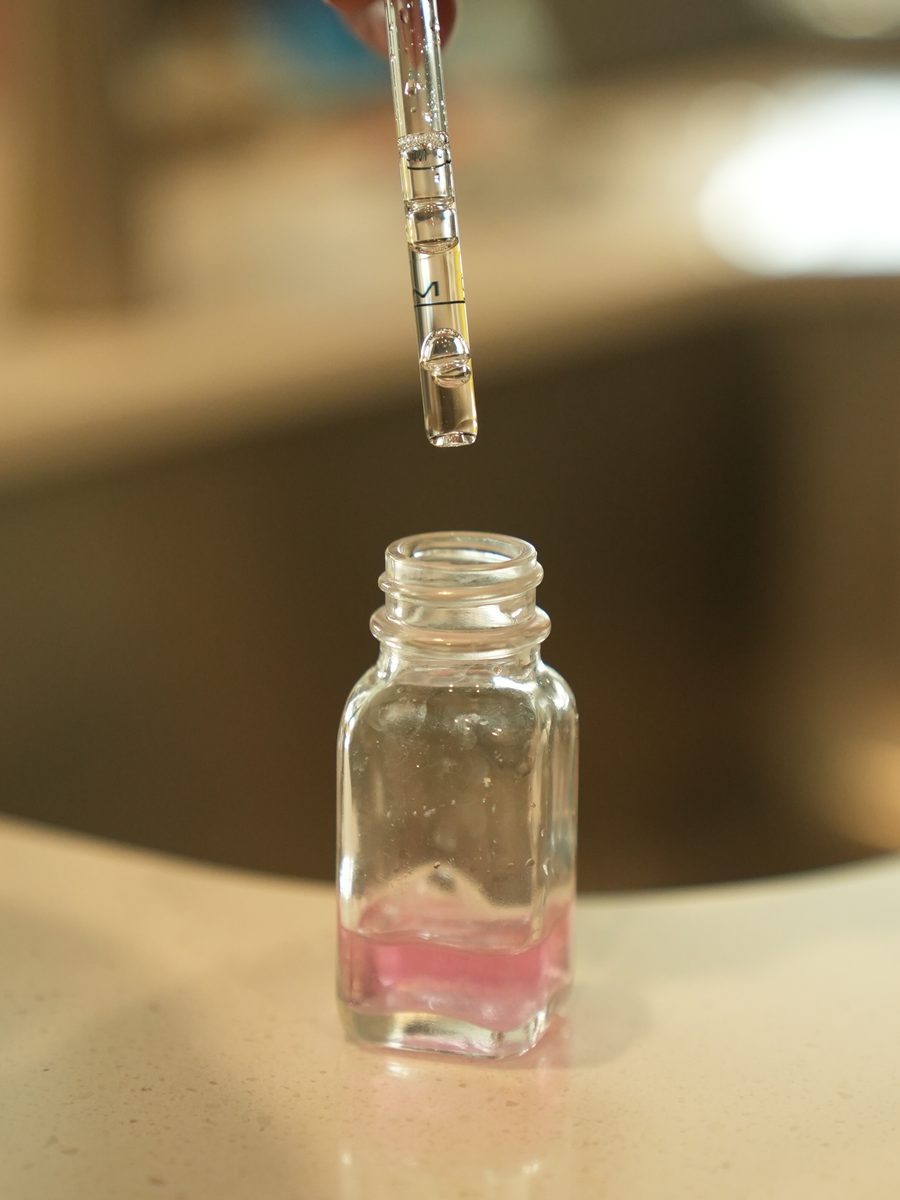
A field test reads hardness and iron at your sink. PFAS need a certified lab, and we send those out.
Where it comes from
A question about where
your water comes from
PFAS are not spread evenly across the valley, and we will not pretend otherwise. Regionally, detections are associated with firefighting foam use at Mountain Home Air Force Base and Gowen Field. Foams built on these compounds were used for decades to knock down fuel fires, and what soaked into the ground did not leave. It followed the water.
That makes PFAS a location question rather than a blanket statement about Idaho water. A well or a source sitting near one of those sites carries a different risk than one on the far side of the valley, and the honest answer for any given address is that nobody knows until the water is tested. Where there is cause, we send a certified lab panel. Where there is not, we say so and save you the cost.
What actually captures PFAS, and what does not
| Method | Holds PFAS | What to know |
|---|---|---|
| Water softener | No | Ion exchange for calcium and magnesium only, the wrong tool entirely |
| Activated carbon | Yes, with contact time | Undersized or spent cartridges quietly stop working long before they look dirty |
| PFAS rated resin | Yes | Built specifically to bind these compounds at whole house volumes |
| Reverse osmosis | Yes, at the drinking tap | Rejects PFAS along with nitrate, arsenic and uranium |
| Boiling | No | Concentrates them instead, the same trap as nitrate |
| Uncertified pitcher | No | Only a filter certified for PFAS does this job |
A field kit cannot find
what a lab measures
The trap we see is confidence built on the wrong test. A field kit at the kitchen counter reads hardness, chlorine, iron and a handful of other things quickly, and that is genuinely useful for most of what a Treasure Valley home is dealing with. It cannot see PFAS. The concentrations sit in parts per trillion, orders of magnitude below what any strip resolves, so a clean field result tells you nothing at all about these compounds.
When there is reason to look, the sample goes to a certified laboratory that can measure at that level, under proper chain of custody. Those numbers, not a guess and not a sales pitch, decide whether you need PFAS treatment and which method fits. A softener quote written off a single hardness reading has answered a completely different question, and the family paying for it never learns that.
"A softener is a good machine doing one job. If somebody tells you it strips PFAS, they have stopped testing and started selling. These compounds need carbon with real contact time, purpose built resin or reverse osmosis, and a lab report to prove the fix actually worked."
What we do about it
Treat it at the tap
that matters most
For PFAS, the drinking water is where the effort belongs. A reverse osmosis system under the kitchen sink pushes water through a membrane fine enough to reject these compounds, along with nitrate, arsenic and uranium, and it gives you clean water at the tap you cook and fill glasses from. For whole house capture, carbon with enough contact time or a resin built for PFAS does the work, sized to your flow and your lab numbers rather than a box on a shelf.
The common failure we find is an undersized carbon cartridge run years past its life. Carbon does not clog and it does not slow down. It just quietly stops holding what it was installed to hold, so a filter that looks fine can be doing nothing. We set change intervals against your own results and confirm the system is producing before we drive away.
If the budget is the obstacle
PFAS treatment is not the place to cut corners, and it should not come down to what a family can pay in one go. We run a rental program for exactly that reason: same equipment, same install standard, spread out instead of paid up front. Budget has never been a good reason to keep drinking water we both know needs work.
What people ask us about PFAS
No charge, no obligation
Find out whether PFAS
reach your tap
We start with a free test at your kitchen sink across Ada, Canyon and Gem counties, and where there is cause we send a certified lab panel. Monday to Friday, 8am to 6pm, weekends by appointment.