
- Home
- Your Water
Your water, tested
Treasure Valley Water,
Measured Honestly
Treasure Valley water quality isn't one number. It's hardness, nitrate, arsenic, uranium and, in parts of the valley, PFAS, and every one of those behaves differently in a pipe. Here's what we find in Boise, Meridian and Nampa homes, and what genuinely removes each one.
Read the meter, not the brochure
Most companies will tell you Idaho water is clean. Clean and hard aren't the same thing, and the meter doesn't care about marketing. A city report describes water leaving a source well, not water arriving at your kitchen sink.
We test at the fixture. That's the difference.
No single machine solves everything, either. A softener is ion exchange built for calcium and magnesium, and it does nothing for nitrate, PFAS or arsenic. Anyone who says otherwise is selling, not testing. Our water treatment services page sets out which hardware belongs on which problem.
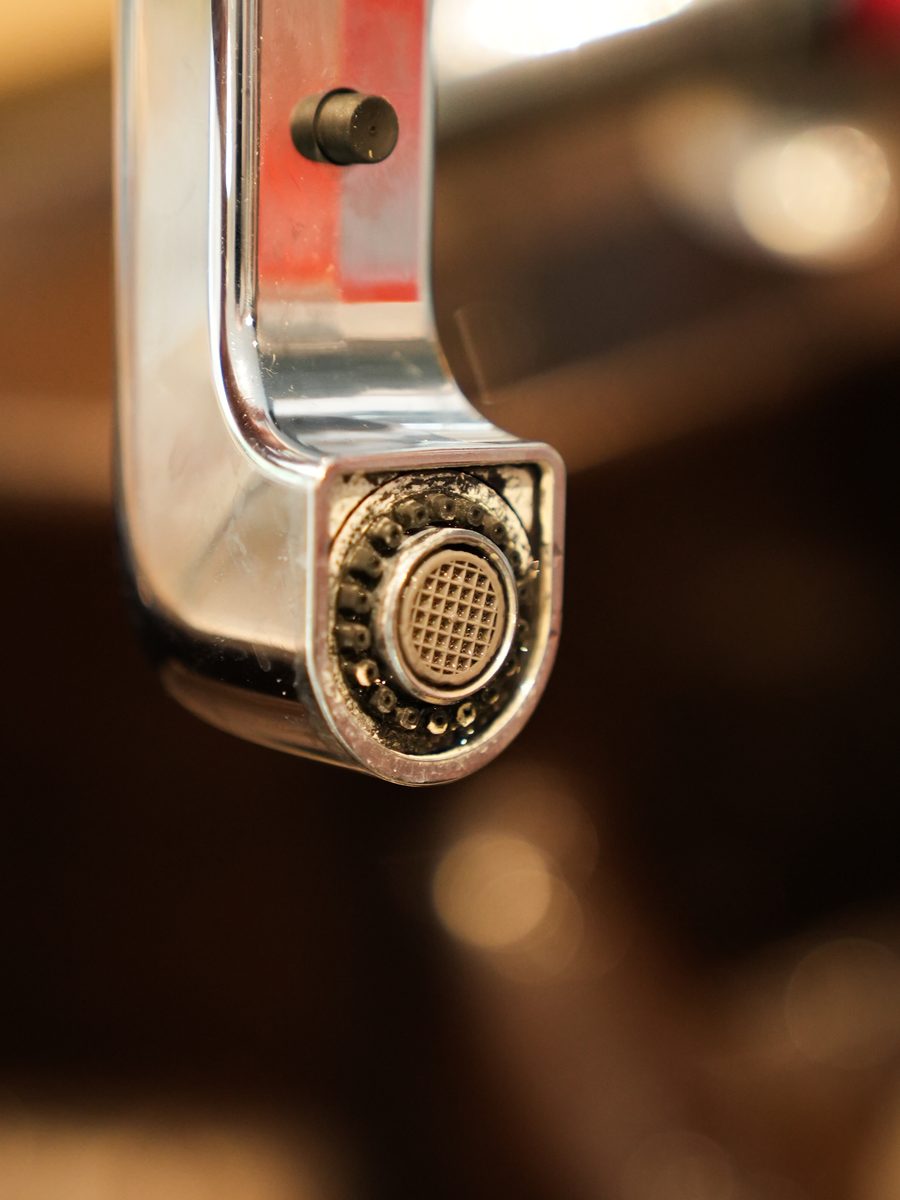
Every free test we run starts at your tap, not at a treatment plant.
Hardness
Hard water is the problem
you can already see
Hardness is dissolved calcium and magnesium, counted in grains per gallon. Boise, Meridian and Nampa typically run 8 to 15 grains per gallon, and water's only considered soft below about 3. So a normal house here sits well past the point where scale stops forming.
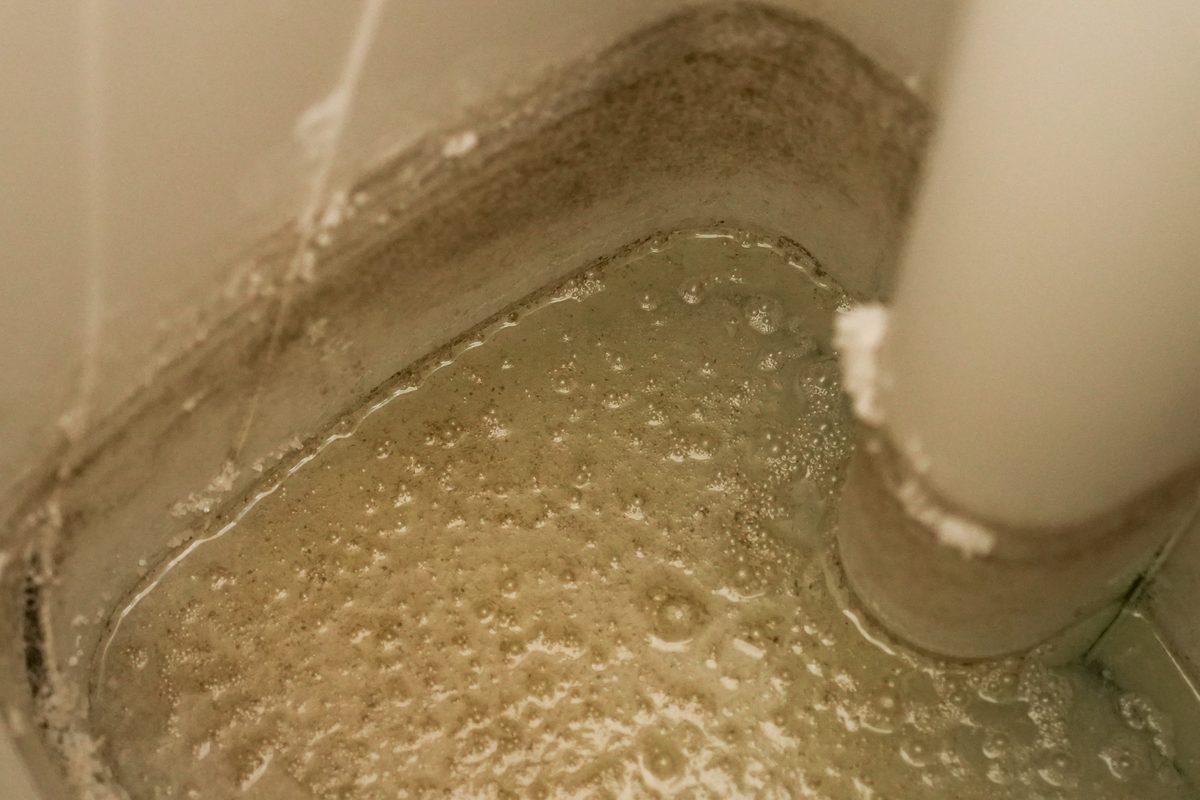
You can see it without a test kit. Pull the element out of a six year old water heater in Meridian and it comes out jacketed in a chalky gray crust that flakes off in sheets, because every gallon that passed through dropped a little of its mineral load onto the hottest surface available. That crust insulates, so the element runs longer to reach the same temperature.
| Where | Typical hardness | Rating | What you notice |
|---|---|---|---|
| Boise | 8 to 12 grains per gallon | Hard | Spotted glassware, scale at the aerator |
| Meridian | 10 to 15 grains per gallon | Very hard | Crusted fixtures, dry skin and scalp |
| Nampa | 10 to 14 grains per gallon | Very hard | Stiff laundry, cloudy shower doors |
| Private wells | Varies widely well to well | Test required | Often iron or sulfur alongside |
| Ideal range | 0 to 3 grains per gallon | Soft | Soap lathers, scale stops forming |
Upper end of typical hardness in Meridian homes
The point below which water is considered soft
"If a heating element is furred over, the tank isn't broken. It's doing its job in a house where nobody dealt with 12 grains of hardness for a decade. Fix the water and the appliances stop being consumables."
Nitrate
Nitrate is the contaminant
we take most seriously
Nitrate is a nitrogen compound out of fertilizer, dairy and feedlot runoff, and septic systems. It travels easily. Loose, permeable ground across the valley lets it soak down into the shallow aquifers plenty of families drink from, and roughly 5 percent of Idaho groundwater monitoring sites exceed the EPA limit of 10 mg/L. Not most sites. But far from nobody, and the failures cluster exactly where you'd expect, on farmed ground with shallow water underneath.
Here's what unsettles people. Nitrate has no taste, no smell and no color, so water at twice the limit looks identical to water at zero. It matters most for infants on formula and for pregnant women, so a household with a new baby on a well should test first.
Reverse osmosis at the drinking tap removes it, and nitrate selective anion exchange handles the whole house. A softener won't touch it. Boiling makes it worse, because you're evaporating water and leaving the nitrate behind in less of it.
PFAS
PFAS don't break down, so
they have to be captured
PFAS are manufactured fluorinated compounds built around a carbon fluorine bond that ordinary groundwater chemistry can't break. They don't degrade. They travel with water and they accumulate.
Regionally, detections are associated with firefighting foam use at Mountain Home Air Force Base and Gowen Field. That makes PFAS a question about where your water comes from, not a blanket statement about the valley.
Capture is the only route. Carbon with enough contact time will hold PFAS, resin built specifically for them will hold them, and reverse osmosis rejects them at the drinking tap. A softener won't, and neither will a pitcher that isn't certified for it. The common failure point we find is an undersized carbon cartridge run years past its life, quietly doing nothing long before it looks dirty.
The well that kept failing after the fix
During a test last spring we pulled a sample from a rural Canyon County well that came back flagged for arsenic. Straightforward, we thought. Reverse osmosis under the kitchen sink, retest in a few weeks, done.
The retest still showed arsenic. Membrane fine, pressure fine, installation clean.
The problem was chemistry, not hardware. Arsenic occurs in two forms, and the trivalent form carries no charge, so an RO membrane lets a meaningful share slip through. Oxidize it first and it converts to the pentavalent form, which the membrane rejects properly. We added an oxidation stage ahead of the membrane and the next report came back where it should have been. Never treat a well on the name of the contaminant alone.
Arsenic and uranium
Some of it was here
long before we were
Arsenic and uranium here aren't a spill. Idaho geology contributes both naturally, and Canyon County wells are the ones we flag most often, because the water moves through rock that's been giving these elements up for a very long time.
Neither announces itself. No taste, no odor, no color. A well can look and taste beautiful and still carry a load you'd never accept if you could see it, which is why an owner who tested once at drilling is betting blind.
Reverse osmosis handles both at the drinking tap when the water's prepared correctly, and adsorptive media handles arsenic at whole house volumes. Uranium responds well to anion exchange. None of it tolerates being installed blind. Sequence and pre treatment decide whether the equipment performs.

Canyon County wells are where we find naturally occurring arsenic most often.
Snowpack
Less snow means everything
gets more concentrated
Idaho came into 2026 off an exceptionally warm winter, among the warmest since records began in 1896, with snowpack at or near record lows.
Snowpack is the valley's savings account. It melts slowly through spring and recharges the aquifers under us, so a thin snow year means the same mass of nitrate, arsenic and uranium ends up dissolved in less water. The contaminants didn't increase. The water diluting them did. Concentration climbs either way.
The Treasure Valley is also one of the fastest growing regions in the country, and more households pull from the same aquifers every year. So we keep meeting wells that tested acceptably a few years ago and read differently now.

Two different problems
City water and well water
fail in different ways
If you're on city water
Your utility disinfects, monitors and reports, so bacteria isn't your fight. Hardness is. Chlorine is too, because it's meant to be there, and it's what dries your skin and flattens the taste of your coffee. Supplies here blend from several source wells, so two neighbors on different pressure zones get different water.
Most city homes we visit need a properly sized softener and carbon, nothing more exotic. See what that looks like on our services page.
If you're on a private well
Nobody tests your water but you. Wells carry iron that stains laundry orange, hydrogen sulfide that makes a wellhead smell like a struck match on a hot August afternoon, hardness past anything the cities see, and the invisible ones: nitrate, arsenic, uranium.
A well needs a real test before anyone talks equipment. We do that free across Ada, Canyon and Gem counties, plus Elmore, Payette, Owyhee, Boise, Valley and Washington. Book a test and we'll tell you what's there.
Match the problem to the fix
"Very happy with the purchase! Wow! After the 2nd shower my hair is becoming alive again! Thank you so much for the softener!"
You can't treat what you haven't measured
Hardness is close to universal here, and a softener fixes it. The rest behaves differently: nitrate, PFAS, arsenic and uranium turn up in some places and not others, none of them announce themselves, and each needs its own equipment. One free test at your tap tells you which you've got. We'll read it in front of you and tell you honestly if you don't need us. Read about the family behind the company, or see how our free testing works.
Questions we get weekly
What Treasure Valley homeowners
ask about their water
Figures on this page come from published EPA, USGS and Idaho DEQ monitoring plus our own field testing across the valley. Groundwater conditions vary street by street and season by season, so treat every range here as a starting point rather than a verdict on your house.
Free and no obligation
Find out what's actually
in your water
We test at your tap across Ada, Canyon and Gem counties, and out to Elmore, Payette, Owyhee, Boise, Valley and Washington. Real numbers, no pressure. If your water's fine, we'll say so.